
Ohio Inmate Population
Ohio has one of the largest inmate populations in the country, with tens of thousands held in state prisons and county jails at any given time. You can search for inmates held in state facilities through the Ohio Department of Rehabilitation and Correction offender search tool, or check county jail rosters run by each of the 88 county sheriffs. The state keeps detailed records on every person in custody, and much of that data is open to the public. Whether you need to find a specific person in a county jail or check the status of someone in a state prison, Ohio gives you ways to look up current inmate population data from your home or in person at local offices.
Ohio Inmate Population Overview
Ohio Inmate Population Search
The main way to search the Ohio inmate population at the state level is through the ODRC Offender Search Portal. This free tool lets you look up anyone who is serving time in an Ohio prison, under state supervision, or on judicial release. You can search by name, county, or hearing date. Results show the person's name, age, sex, facility, and sentence info. It works well for finding people who have moved past the county jail and into the state prison system.
The Ohio Department of Rehabilitation and Correction runs all state prisons and keeps track of every inmate from the day they come in until they leave. The ODRC records include the name, residence, sex, age, nativity, and occupation of each person. They also log the date of entrance, the cause and terms of discharge, and any transfers between facilities. If an inmate dies in custody, the department notes the date and cause. These records go deep and cover the full time a person spends in the state system.
The screenshot below shows the ODRC homepage, which serves as the starting point for all state-level inmate population searches in Ohio.
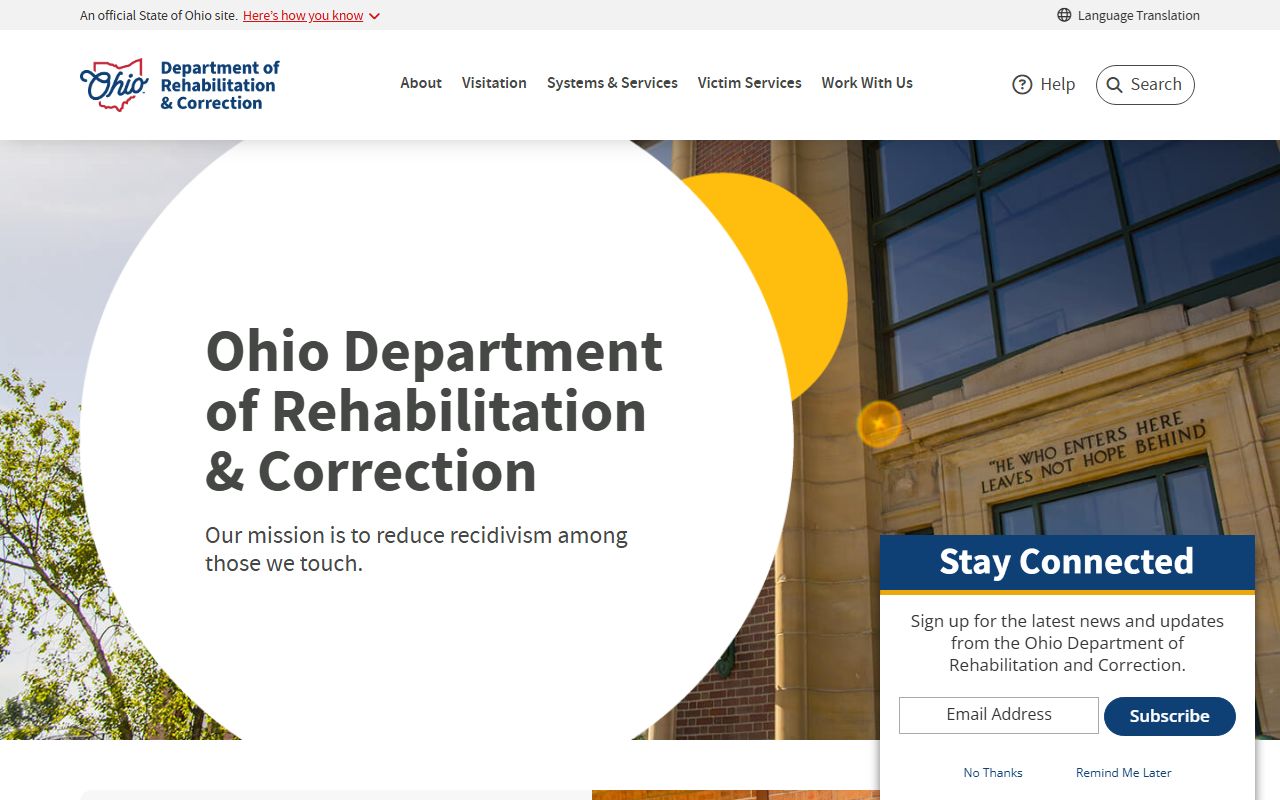
From this page you can reach the offender search tool, find facility info, and learn about victim notification services.
County jails work a bit different. Each of Ohio's 88 counties has its own sheriff who runs the local jail. Most counties post a jail roster on their website. Some use third-party systems to show who is in custody right now. The roster will list the person's name, charges, bond amount, and booking date. Not all counties have the same level of online access, but the trend has been toward more open data in recent years.
Note: The ODRC offender search covers state prison inmates only. For people held in county jails, check the sheriff's office website for that county.
What Ohio Inmate Records Show
Under Ohio Revised Code Section 5120.21, the ODRC must keep a record of every inmate that passes through its system. These records hold a lot of data. You get the person's full name, where they lived, their sex, age, and where they were born. The file also tracks their occupation before they went in. Each record notes when the person entered the facility and what sentence they are serving.
The screenshot below shows the Ohio Revised Code section that sets the rules for how the state handles inmate records.
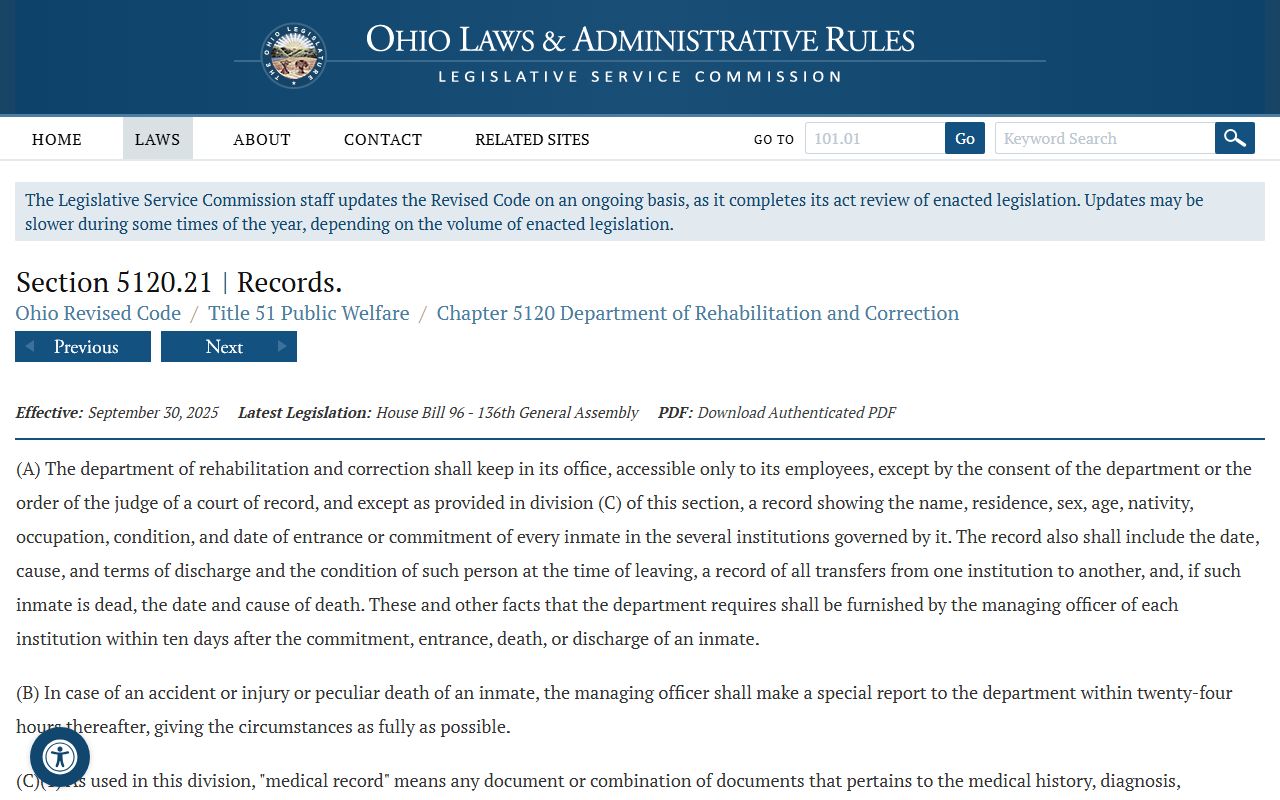
This law spells out what data the state must keep and who can see it.
When someone leaves custody, the record gets updated with the date and cause of discharge, along with the person's condition at the time. If an inmate gets moved from one prison to another, that goes in the file too. And when there is an accident, injury, or unusual death, the facility manager has to send a special report to the department within 24 hours with as much detail as possible. Medical records are kept apart from the main file and can only be shared with certain people, like the inmate's lawyer or doctor, upon written request.
Not all of this data is open to the public. Most inmate records held by the ODRC are not public records under Ohio Revised Code Section 149.43. But some pieces can be shared. The law allows the release of the inmate's name, criminal convictions, photograph, supervision status (including current and past places of confinement), and disciplinary history. So you can still get useful info, just not the whole file.
Ohio Inmate Population and Sentencing
Ohio's sentencing laws shape the size of the inmate population in big ways. The state uses what it calls "prison terms" and "community control sanctions" to handle offenders. A prison term means time in a state facility run by the ODRC. A community control sanction means something other than prison, like probation or a halfway house. Under Ohio Revised Code Section 2929.01, a "jail" is a local facility run by a county or city for people who are awaiting trial or serving shorter sentences. A "prison" is a state facility for convicted felons.
Mandatory prison terms exist for certain crimes. The court has no choice but to send the person to state prison in those cases. This adds to the overall inmate population count. On the other hand, courts can also use alternative residential facilities and halfway houses for some offenders. These are places where people can live and still work or get treatment, which helps keep the jail and prison counts from going even higher.
The screenshot below shows the Ohio Revised Code section that defines key sentencing terms used across the state.
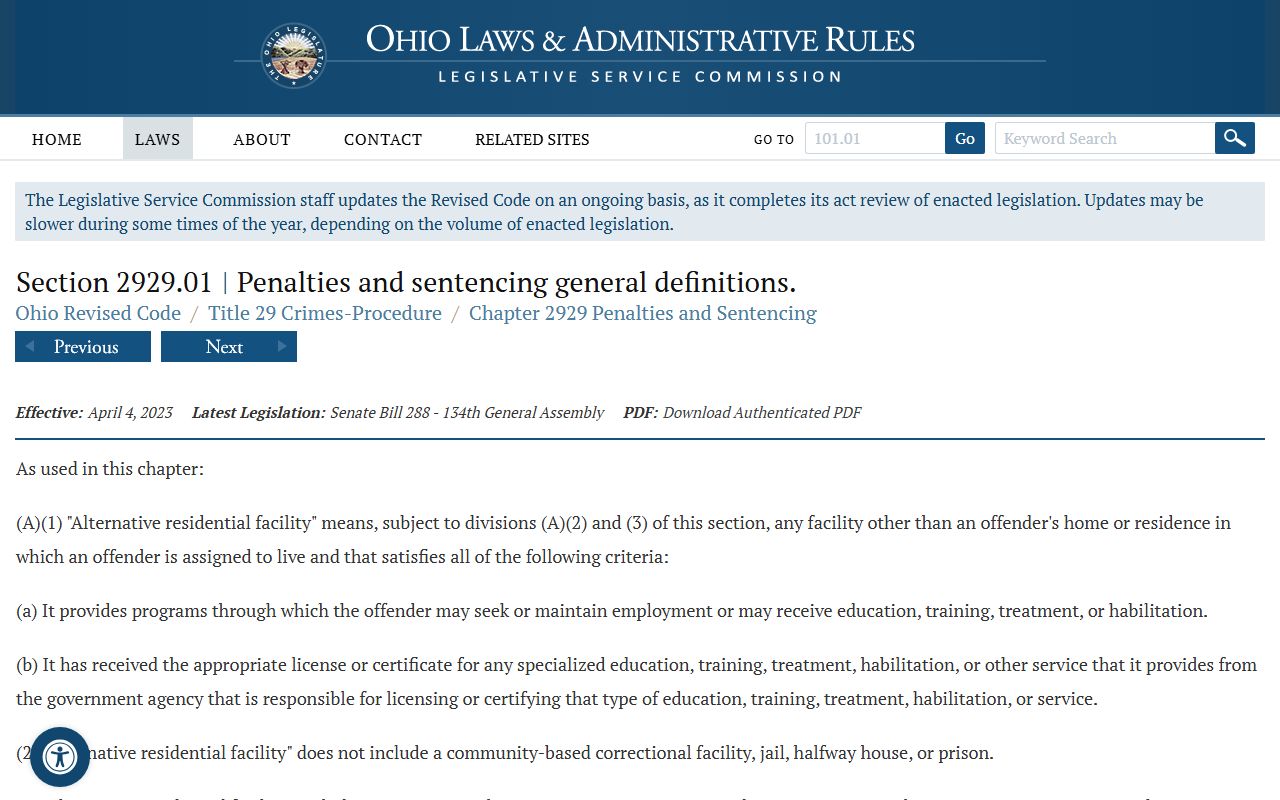
These definitions set the legal groundwork for how judges decide where an offender will serve their time.
County Jails and Ohio Inmate Population
Every county in Ohio has a jail run by the local sheriff. That is the law. Ohio Revised Code Section 341.01 says the sheriff shall have charge of the county jail and all persons in it. The sheriff must keep those people safe, look after the building, and run things according to the state's minimum jail standards. This applies to all 88 counties.
County jails hold a mix of people. Some are waiting for trial and have not been convicted yet. Others are serving sentences for misdemeanors or low-level felonies. Some are just passing through on their way to a state prison. The jail roster at any given time shows this mix. It is a snapshot of the local inmate population that changes day to day as people get booked in and released.
The state also has rules about how jails must separate inmates. Under Ohio Revised Code Section 341.09, when the jail's design allows it, prisoners must be separated as the minimum standards require. This means men and women stay apart. People with different risk levels get housed in different areas. The ODRC can step in and take the county to court if a jail does not follow these rules.
The screenshot below shows the state law page that gives sheriffs authority over county jail operations.
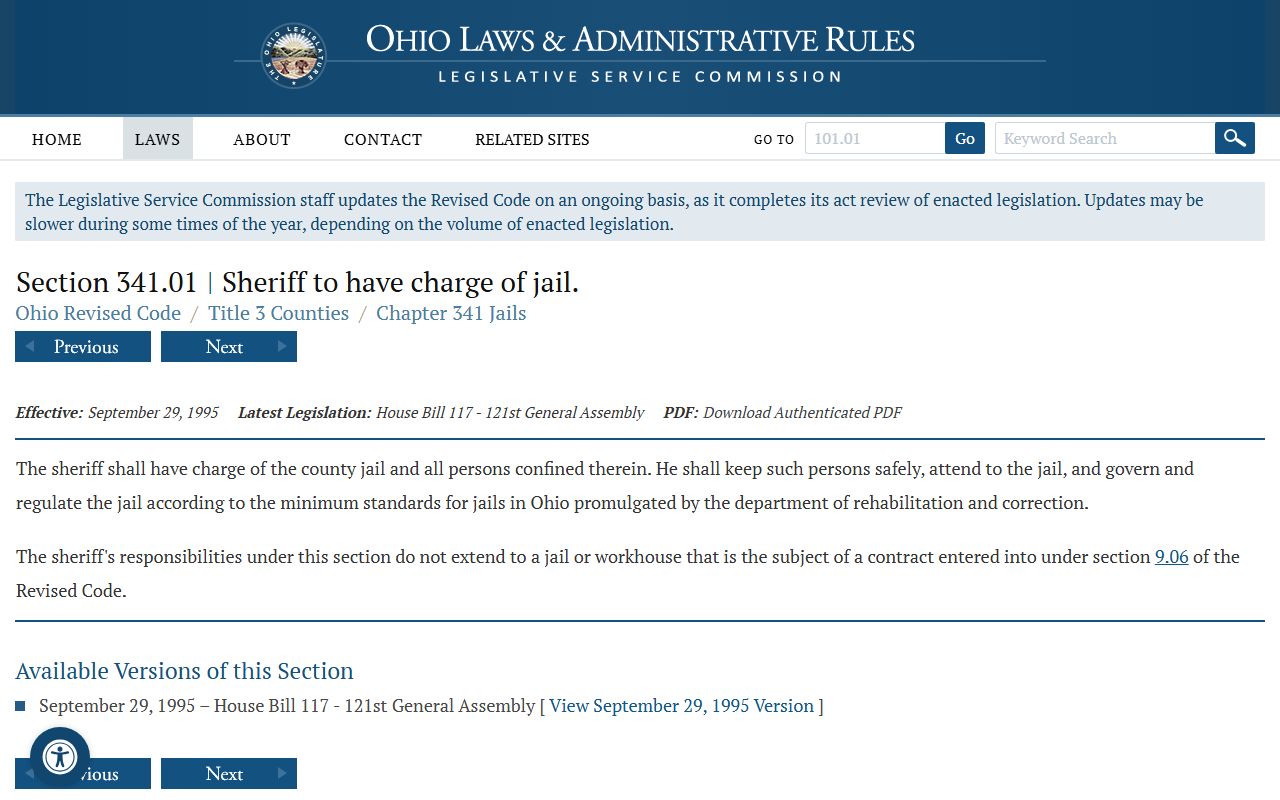
This section of the Ohio Revised Code is the foundation for how every county jail in the state operates.
Jail costs can add up for inmates too. Under Ohio Revised Code Section 2929.37, counties can charge prisoners for part of their stay. The county can bill for room and board, medical care, dental work, drug tests, and even a one-time processing fee. The inmate gets an itemized bill when they leave and can make payments over time.
Parole and Post-Release in Ohio
The Ohio inmate population does not just include people behind bars. It also covers those on parole and post-release control. Under Ohio Revised Code Section 2967.01, "parole" is a release from prison by the Adult Parole Authority. It applies to people serving life terms or those sentenced before July 1, 1996. A "parolee" is someone who has been let out but is still under watch and has not received final release.
"Post-release control" is a newer term. It means a period of supervision after someone gets out of prison. The Adult Parole Authority handles this too. If a person breaks the rules of their post-release control, they can be sent back. The ODRC offender search tool tracks people in both of these groups, so you can see if someone is in prison, on parole, or under post-release supervision.
The screenshot below shows the Ohio Revised Code section that defines parole and related terms.
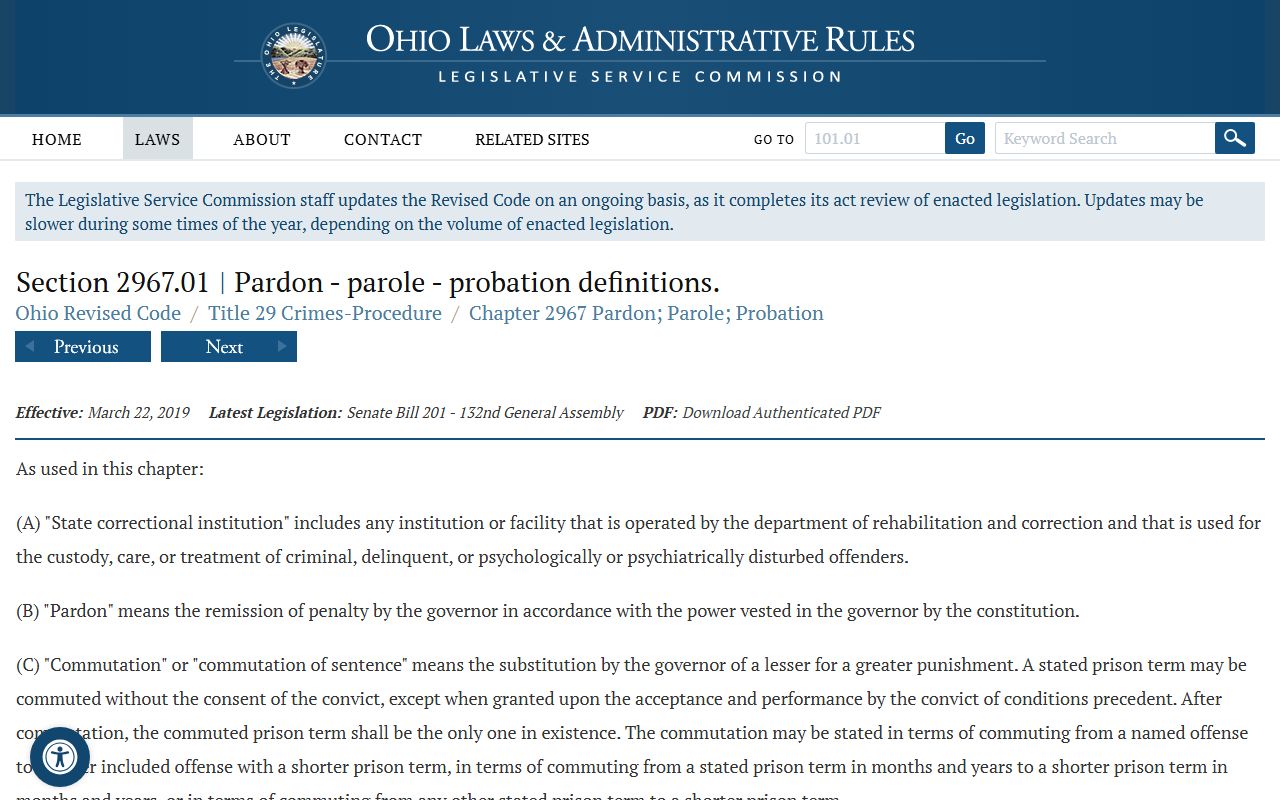
Understanding these definitions helps make sense of the different statuses you see when searching the ODRC database.
Victim Services and Ohio Inmate Population Data
Crime victims in Ohio have a right to know about the inmate population as it relates to their cases. Under Ohio Revised Code Section 2930.01, a "custodial agency" includes the ODRC, the Adult Parole Authority, county sheriffs, and anyone who runs a jail or community corrections facility. Victims can register with the state to get updates when the offender's status changes. This might mean a transfer, a release, or a parole hearing.
Roberta's Law, which took effect in March 2013, expanded these rights. If the inmate was convicted of aggravated murder, murder, or a serious violent offense, the victim gets automatic notification of key events. They do not even have to ask. The Ohio Attorney General's Office runs victim services and can help people sign up for these alerts. Marsy's Law, approved by Ohio voters in 2017, added even more protections for crime victims in the state.
The Bureau of Criminal Identification and Investigation also plays a role. Under Ohio law, the superintendent of the BCI collects photographs, fingerprints, and records of all people convicted of felonies. Every court clerk in the state sends weekly reports to the BCI with case summaries. The bureau runs the Ohio Law Enforcement Gateway, known as OHLEG, which helps law enforcement share criminal justice data across the state.
The screenshot below shows the Ohio Attorney General's victim services page, which provides resources for people affected by crime.
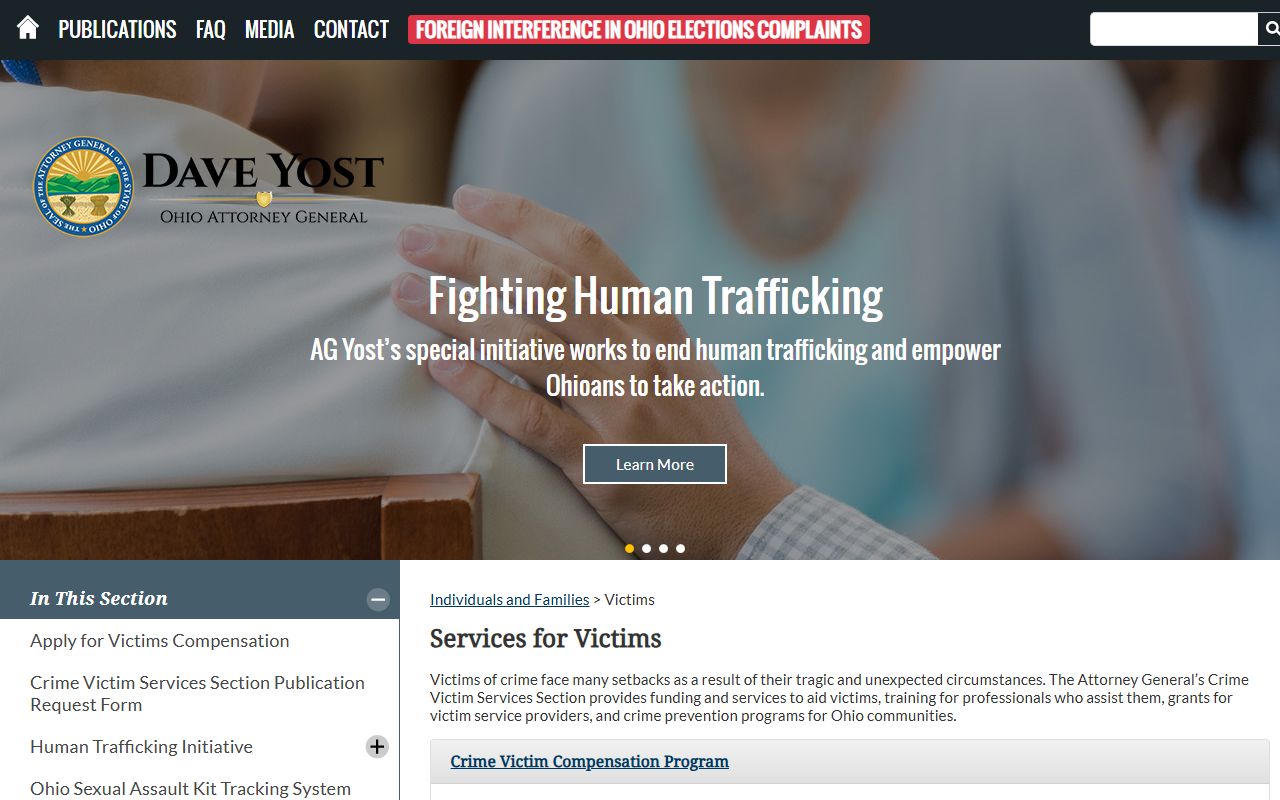
Victims can find forms, learn about their rights, and sign up for inmate notifications through this page.
Ohio Inmate Population and Public Safety
The Ohio Department of Public Safety works alongside the ODRC to keep communities safe. This department oversees the Ohio State Highway Patrol, the Bureau of Motor Vehicles, the Emergency Management Agency, the Office of Criminal Justice Services, and the Ohio Investigative Unit. Together, these agencies work with local law enforcement on violent crime reduction across the state.
The screenshot below shows the Ohio Department of Public Safety website, a key resource for statewide law enforcement coordination.
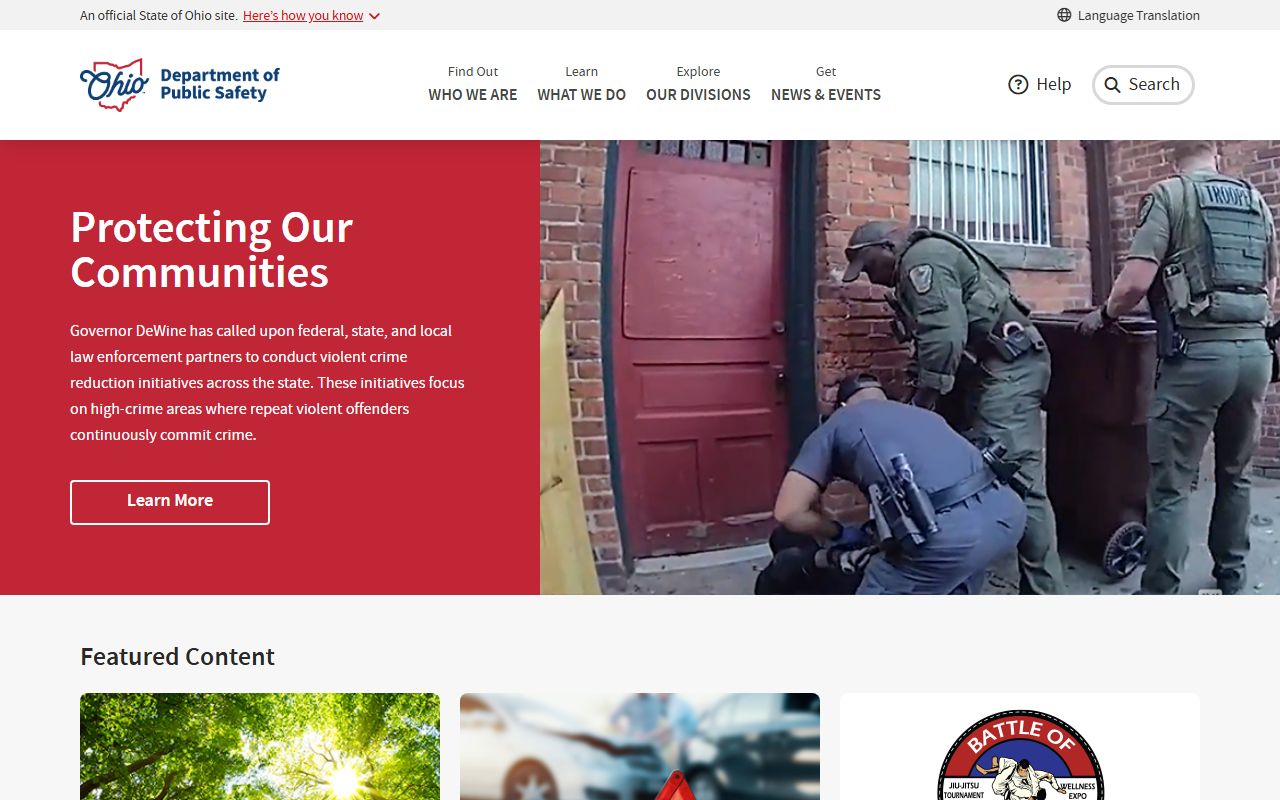
This site connects you to resources on criminal justice services, crime stats, and public safety programs across Ohio.
The sex offender registry is another part of the picture. Under Ohio Revised Code Section 2950.01, sex offenders must register for set periods based on their tier. Tier I offenders register for 15 years. Tier II offenders register for 25 years. Tier III offenders register for life. This registry connects to the broader inmate population data because many of these individuals cycle through jails and prisons. The ODRC offender search tool can show if someone is a registered sex offender.
Ohio State Prison Inmate Population
Chapter 5145 of the Ohio Revised Code sets the rules for how the state runs its prisons. It covers sentence lengths, facility rules, and inmate programs. The ODRC must make rules that help reform the people in its care. This includes separating prisoners into different groups based on their behavior, giving them a chance to work, and providing education through the Ohio Central School System.
Work programs are a big part of prison life. The department runs manufacturing and service operations, farm work, public works projects, and in-house jobs. The goal is to keep inmates busy with useful tasks that build skills for when they get out. Education programs cover everything from basic reading and math to GED prep and job training. These programs aim to cut down on the number of people who come back to prison after release.
The daily record of each inmate tracks their conduct, including the date they came in, their name, age, and background. This register is the backbone of the state's inmate population data. It gives officials and the public a way to track who is in the system and what their status is at any point.
Browse Ohio Inmate Population by County
Each of Ohio's 88 counties has its own sheriff's office that manages the local jail and inmate roster. Pick a county below to find local inmate search tools, jail info, and resources for that area.
Inmate Population in Major Ohio Cities
Residents of Ohio's biggest cities are booked into the county jail that serves their area. Pick a city below to find out where to search for inmates and get local jail info.